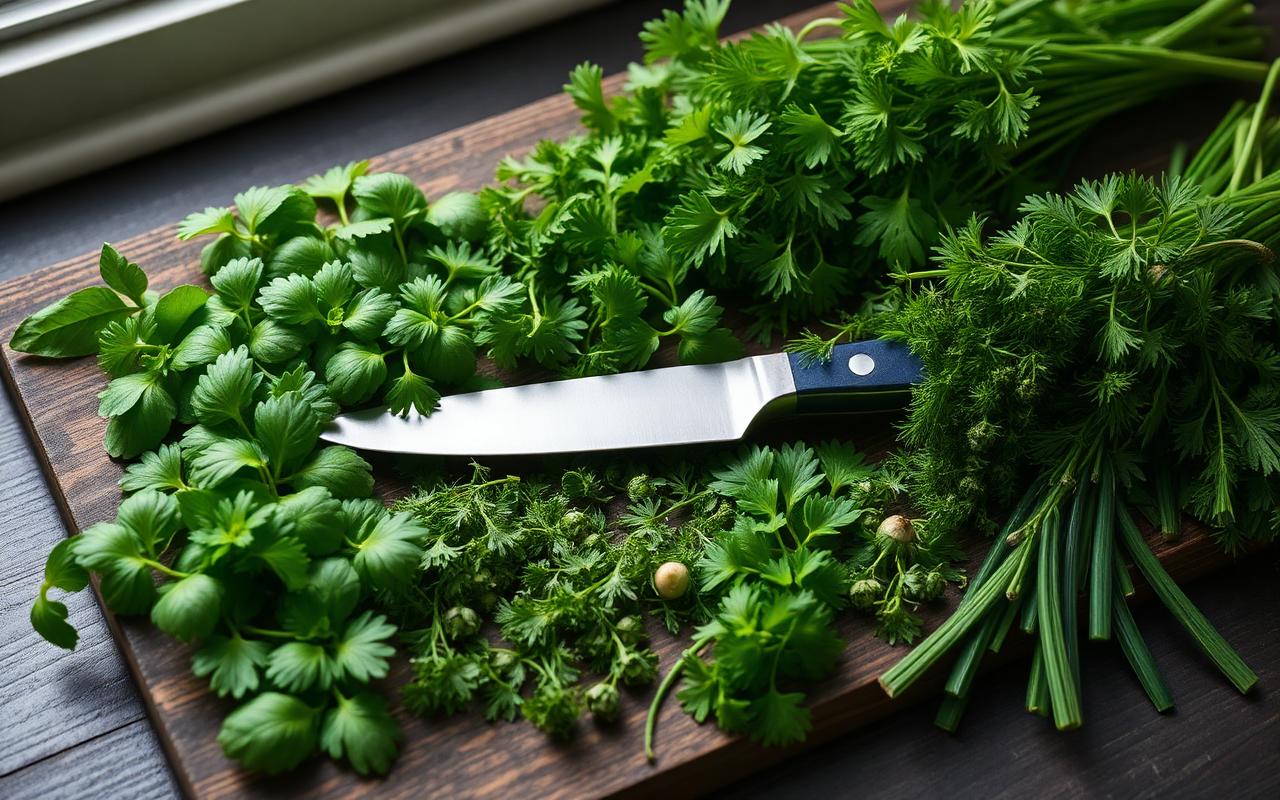
Fresh herbs are one of the single best tools for low-sodium cooking. They add fragrance, brightness, and complexity that salt can't replicate, and unlike dried herbs, a little goes a long way because their oils are so much more potent. If your food still tastes like it's missing something after you've backed off the salt, the answer is often more fresh herbs, added at the right moment.
This guide walks through twelve herbs worth keeping on hand, how to store and use them so nothing goes to waste, and how to turn them into sauces that do a lot of the seasoning work for you.
Herb by herb
Basil
Sweet, peppery, and slightly anise-like. Pairs with tomatoes, mozzarella, garlic, and olive oil. Add it at the very end of cooking or raw, since heat turns it dark and dulls its flavor. Try it torn over a bowl of pasta with no-salt-added marinara.
Cilantro
Bright, citrusy, and polarizing — some people find it soapy due to genetics. Pairs with lime, chiles, garlic, and cumin. Add raw or at the very end of cooking. Great stirred into black bean soup or scattered over tacos.
Parsley (flat vs. curly)
Flat-leaf (Italian) parsley has a stronger, more peppery flavor and holds up better in cooked dishes; curly parsley is milder and mostly used as a fresh garnish. Both pair with almost everything savory. Add flat-leaf parsley partway through cooking for depth, or either variety raw at the end for freshness. Try flat-leaf parsley in a chimichurri (recipe below).
Rosemary
Piney, resinous, and strong — a little goes a long way. Pairs with roasted chicken, potatoes, and lamb. Add early in cooking, since it holds up well to heat; whole sprigs can go into the pan with a roast, like our lemon herb roast chicken.
Thyme
Earthy and slightly minty, one of the most versatile cooking herbs. Pairs with poultry, mushrooms, beans, and root vegetables. Add early in cooking, since its woody stems and small leaves hold their flavor through long simmers — perfect for soups like flavorful low-sodium soup.
Dill
Grassy and slightly tangy, with a distinctive aroma. Pairs with fish, cucumbers, potatoes, and yogurt-based sauces. Add at the end of cooking or raw. Excellent on citrus herb white fish or stirred into a yogurt sauce.
Mint
Cooling and sweet-sharp. Pairs with lamb, peas, cucumber, and fruit. Add raw or at the very end, since heat destroys its fresh quality quickly. A few torn leaves brighten a grain salad or a bowl of roasted carrots.
Oregano
Bold, slightly bitter, and earthy — the backbone of many Mediterranean and Mexican dishes. Pairs with tomatoes, garlic, olives, and grilled meats. Holds up well to cooking, so add it early or use dried for long-simmered sauces.
Sage
Musky, slightly peppery, and strong. Pairs with pork, winter squash, and butter-based sauces. Add early in cooking, or fry whole leaves briefly in oil until crisp for a fragrant garnish over roasted squash or potatoes.
Chives
Mild, oniony, and delicate. Pairs with eggs, potatoes, and creamy sauces. Always add raw and at the very end, since heat destroys their flavor almost instantly. Snip over scrambled eggs or a baked potato.
Tarragon
Distinctive, slightly sweet, with a hint of anise. Pairs with chicken, fish, and egg dishes. Add near the end of cooking to preserve its delicate flavor; it's a classic partner for a simple pan sauce.
Marjoram
Similar to oregano but milder and sweeter. Pairs with roasted vegetables, poultry, and bean dishes. Add near the end of cooking since its flavor is delicate compared to its cousin oregano.
Hardy vs. soft herbs
Herbs generally fall into two camps, and knowing which is which tells you when to add them.
- Hardy herbs (rosemary, thyme, sage, oregano, marjoram) have sturdier leaves and woody stems that can withstand long cooking times. Add them early, even with whole sprigs, and fish out the stems before serving.
- Soft herbs (basil, cilantro, parsley, dill, mint, chives, tarragon) have tender leaves that wilt and lose flavor quickly under heat. Add them at the end of cooking or use them raw as a finishing touch.
Storing herbs so they last
- Soft herbs like parsley, cilantro, and basil last longest treated like cut flowers: trim the stems, stand them in a jar with an inch of water, and loosely cover with a plastic bag in the fridge (basil prefers room temperature, out of direct sun).
- Hardy herbs like rosemary and thyme keep well wrapped loosely in a damp paper towel inside a bag in the crisper drawer.
- Wash herbs right before use rather than right after buying — excess moisture speeds up decay.
Using the stems
Don't toss the stems. Cilantro and parsley stems are packed with flavor and can be finely chopped and added to sautés, soups, or sauces. Herb stems also make a great addition to homemade stock, like the no-salt vegetable stock, where they simmer alongside vegetable scraps for hours.
Growing a windowsill herb pot
A small pot of soft herbs on a sunny windowsill pays for itself quickly. Basil, chives, mint, and parsley are especially forgiving for beginners:
- Choose a pot with drainage holes and a sunny spot (at least four to six hours of light).
- Water when the top inch of soil feels dry, and avoid letting pots sit in standing water.
- Snip from the outer leaves or stems regularly to encourage bushier growth rather than letting the plant flower and go leggy.
Freezing herbs in oil
If you have more herbs than you can use fresh, freezing them in oil preserves flavor far better than freezing them plain.
- Finely chop herbs and pack them into an ice cube tray, filling each cavity about two-thirds full.
- Top with olive oil, covering the herbs completely.
- Freeze until solid, then pop the cubes into a labeled freezer bag.
- Drop a cube directly into a hot pan when starting a sauté, soup, or sauce.
Building herb sauces
Herb sauces are one of the most efficient ways to add concentrated flavor to simply cooked food. A spoonful over grilled chicken, roasted vegetables, or fish does more work than any dry seasoning could on its own.
- Chimichurri: finely chop flat-leaf parsley and a little oregano, then combine with minced garlic, red wine vinegar, olive oil, and red pepper flakes. Spoon over grilled or roasted meats.
- Salsa verde: blend or finely chop parsley, capers (rinsed if you're watching sodium), garlic, lemon juice, and olive oil for a tangy, herby sauce that's excellent over fish or roasted potatoes.
- Pesto without salt: blend fresh basil, toasted pine nuts or walnuts, garlic, nutritional yeast in place of Parmesan, lemon juice, and olive oil. The nutritional yeast adds a savory, cheese-like note without the sodium a traditional Parmesan-based pesto would carry.
These sauces are a great way to put technique #23 from our 25 ways to add flavor without salt into practice, and they pair naturally with the herb-forward seasoning ideas in our best salt-free seasonings guide.
Herbs are generally very low in sodium on their own, but if you're managing a specific health condition, check with your healthcare professional about any dietary restrictions before making major changes to your diet.
Related Reading
- 25 Ways to Add Flavor Without Salt — more techniques to use alongside fresh herbs.
- The Best Salt-Free Seasonings for Everyday Cooking — dried blends to pair with fresh herb finishes.
- Your Salt-Free Spice Cabinet: What to Stock — build out your dried herb and spice collection.
- Flavorful Low-Sodium Soup, Step by Step — see hardy and soft herbs in action in a real recipe.