Butternut Squash Risotto with Crispy Sage
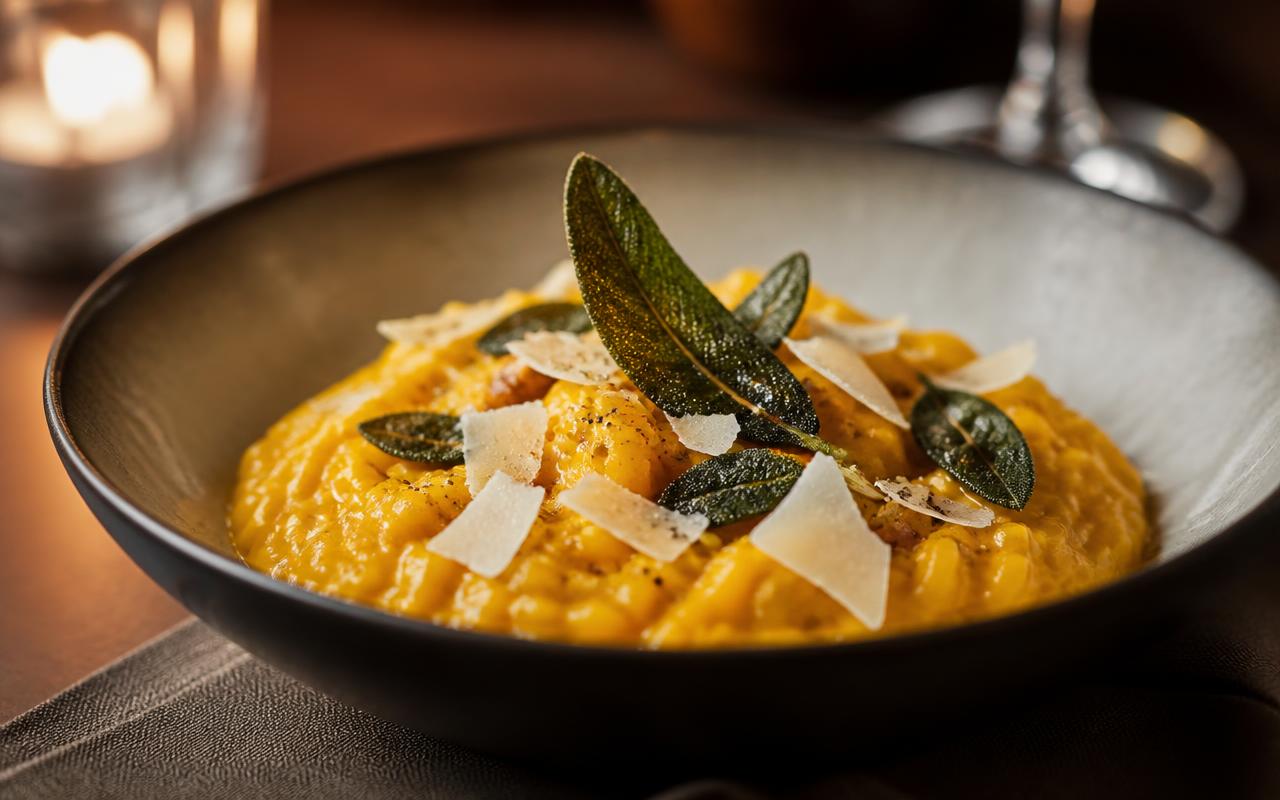
Risotto has a reputation for being finicky, but the reward is a bowl of impossibly creamy rice that tastes indulgent without needing a heavy hand of salt. Here, roasted butternut squash is pureed directly into the rice for natural sweetness and a velvety golden color, while a light dusting of Parmesan lends salty-savory depth in modest amounts. Crispy fried sage leaves scattered on top add an irresistible crunch and earthy aroma. It is a vegetarian centerpiece elegant enough for a dinner party yet comforting enough for a quiet night in.
- Prep
- 15 minutes
- Cook
- 45 minutes
- Total
- 1 hour
- Serves
- 4 servings
- Difficulty
- Intermediate
Estimated sodium
Approx. 140 mg per serving (estimated)
Ingredients
For the squash
- 1 small butternut squash, peeled and cubed (about 3 cups)
- 2 tablespoons olive oil
- 1/2 teaspoon ground black pepper
- 1/4 teaspoon ground nutmeg
For the risotto
- 5 cups no-salt-added vegetable stock, kept warm
- 3 tablespoons unsalted butter, divided
- 1 small yellow onion, finely diced
- 2 cloves garlic, minced
- 1 1/2 cups Arborio rice
- 1/2 cup dry white wine
- 1/3 cup finely grated Parmesan cheese
- 1 tablespoon fresh sage leaves, plus 12 whole leaves for frying
- 2 tablespoons neutral oil, for frying sage
- Optional finishing pinch of flaky salt (a few grains per serving)
Method
- 1
Preheat the oven to 400°F and toss the butternut squash cubes with olive oil, pepper, and nutmeg on a baking sheet.
- 2
Roast the squash for 25 to 30 minutes, until deeply caramelized and fork-tender, then set aside two-thirds for pureeing and reserve the rest for garnish.
- 3
Puree the reserved roasted squash with a ladle of warm vegetable stock until completely smooth; set this puree aside.
- 4
In a heavy-bottomed pot, melt 2 tablespoons of butter over medium heat and sauté the onion until soft and translucent, about 5 minutes.
- 5
Add the garlic and cook for 30 seconds until fragrant, then stir in the Arborio rice and toast it for 2 minutes, coating each grain in butter.
- 6
Pour in the white wine and stir until it is fully absorbed by the rice.
- 7
Begin adding the warm stock one ladleful at a time, stirring frequently and waiting until each addition is nearly absorbed before adding the next.
- 8
Continue this process for about 20 minutes, until the rice is creamy and tender with a slight bite in the center.
- 9
Stir in the butternut squash puree, remaining tablespoon of butter, Parmesan, and chopped sage, mixing until glossy and well combined.
- 10
While the risotto rests, heat the neutral oil in a small skillet over medium heat and fry the whole sage leaves for about 20 seconds per side, until crisp; drain on a paper towel.
- 11
Taste the risotto and adjust with additional pepper or a small pinch of the optional salt if desired.
- 12
Divide the risotto among warm bowls, top with the reserved roasted squash cubes, and finish with the crispy fried sage leaves.
Chef's Technique
The mantecatura technique, in which cold butter and cheese are vigorously stirred into finished risotto off the heat, is what gives this dish its signature creamy emulsion. Blending roasted squash into the stock rather than simply stirring in cubes ensures every bite carries the same golden color and sweetness. Frying the sage leaves briefly in hot oil crisps their structure while intensifying their earthy, resinous aroma.
Flavor Without Salt
Roasting the squash before pureeing concentrates its natural sugars through caramelization, giving the risotto a deep sweetness that needs very little seasoning to shine. Nutmeg and black pepper add warmth and gentle spice that make the dish taste layered and complex. Parmesan, used in a modest but flavorful amount, contributes concentrated umami and a pleasant saltiness naturally, meaning very little additional sodium is required.
Restaurant-Worthy Plating
Ladle the risotto into shallow, warmed bowls using a gentle swirling motion so it settles into an even, glossy layer. Arrange a few reserved roasted squash cubes artfully across the top for textural contrast and color. Lean two or three crispy sage leaves against the mound of rice so they stand upright for visual drama. Finish with a light shaving of Parmesan and a final crack of black pepper right before serving so the risotto is presented at its creamiest.
Nutrition (estimated, per serving)
- Calories
- Approx. 420 kcal
- Protein
- Approx. 11 g
- Carbs
- Approx. 62 g
- Fat
- Approx. 14 g
- Sodium
- 140 mg per serving
Nutrition and sodium information is an estimate only and will vary based on ingredients, brands, serving sizes and preparation methods. Always check the labels on the products you buy.
Substitutions
- Pumpkin puree can replace roasted butternut squash for a quicker, equally delicious version.
- Nutritional yeast can stand in for Parmesan for a dairy-free, plant-based risotto.
- Brown rice risotto blends can replace Arborio for a heartier, nuttier texture, though cooking time will increase.
- Rosemary or thyme can be substituted for sage if you prefer a different herbal note.
- A dry vermouth works well in place of white wine if that is what you have on hand.
Suggested side
A simple arugula salad with lemon vinaigrette provides a peppery, acidic counterpoint to the rich risotto.
Pairing
Pair with a buttery Chardonnay or a dry Italian Vermentino; for a non-alcoholic option, try warm spiced apple cider.
Storage and reheating
Store leftover risotto in an airtight container in the refrigerator for up to 3 days; reheat gently with a splash of stock to restore creaminess.