Lemon Herb Risotto with Asparagus
Risotto has a reputation for requiring constant salting to taste right, but this version proves otherwise, leaning on a rich no-salt-added stock and a generous finish of lemon and herbs. Slow-roasted asparagus adds a caramelized sweetness while Parmesan brings just enough natural saltiness to round things out. It's a comforting, elegant vegetarian main or an impressive side. This recipe is proof that low sodium gourmet recipes can still deliver that creamy, indulgent risotto experience.
- Prep
- 10 minutes
- Cook
- 35 minutes
- Total
- 45 minutes
- Serves
- 4 servings
- Difficulty
- Intermediate
Estimated sodium
Approx. 150 mg per serving (estimated)
Ingredients
Asparagus
- 1 bunch asparagus, trimmed and cut into 2-inch pieces
- 1 tablespoon olive oil
- Freshly cracked black pepper, to taste
Risotto
- 1 tablespoon olive oil
- 2 tablespoons unsalted butter, divided
- 1 small onion, finely diced
- 2 cloves garlic, minced
- 1 1/2 cups Arborio rice
- 1/2 cup dry white wine
- 5 cups no-salt-added vegetable stock, warmed
- 1/2 cup finely grated Parmesan cheese
- 2 tablespoons fresh lemon juice
- 1 teaspoon lemon zest
- 2 tablespoons fresh parsley, chopped
- 1 tablespoon fresh chives, chopped
- Freshly cracked black pepper, to taste
- Optional finishing pinch of flaky salt (a few grains, entirely optional)
Method
- 1
Preheat the oven to 425°F. Toss the asparagus with olive oil and black pepper, spread on a sheet pan, and roast for 10 to 12 minutes until tender with lightly charred edges.
- 2
Warm the vegetable stock in a saucepan over low heat and keep it at a gentle simmer throughout the cooking process.
- 3
Heat olive oil and one tablespoon of butter in a wide, heavy pot over medium heat.
- 4
Add the onion and cook for 4 to 5 minutes until soft and translucent, then add the garlic and cook for another minute until fragrant.
- 5
Add the Arborio rice and toast, stirring constantly, for 2 minutes until the edges turn slightly translucent and the rice smells nutty.
- 6
Pour in the white wine and stir until fully absorbed, scraping up any browned bits from the bottom of the pot.
- 7
Add the warm stock one ladleful at a time, stirring frequently and waiting until each addition is nearly absorbed before adding the next, for about 20 to 25 minutes total.
- 8
Once the rice is creamy and just tender with a slight bite, remove from the heat and stir in the remaining butter, Parmesan, lemon juice, and lemon zest.
- 9
Fold in the roasted asparagus, parsley, and chives, reserving a few pieces of asparagus for garnish.
- 10
Taste and adjust with black pepper and an optional tiny pinch of flaky salt if desired, then serve immediately while creamy and warm.
Chef's Technique
The gradual addition of warm stock, stirred continuously, coaxes starch out of the Arborio rice to create risotto's signature creamy texture without any added cream. Toasting the rice briefly before adding liquid is a crucial step that builds a nutty base flavor and helps the grains hold their structure through the long cooking process.
Flavor Without Salt
A well-reduced, no-salt-added stock forms the flavorful backbone of the dish, while toasting the rice and sautéing the aromatics build layers of savory depth. Parmesan contributes natural umami and a touch of salt from the cheese itself, and a generous finish of lemon juice and zest brightens the richness, keeping every bite from tasting flat.
Restaurant-Worthy Plating
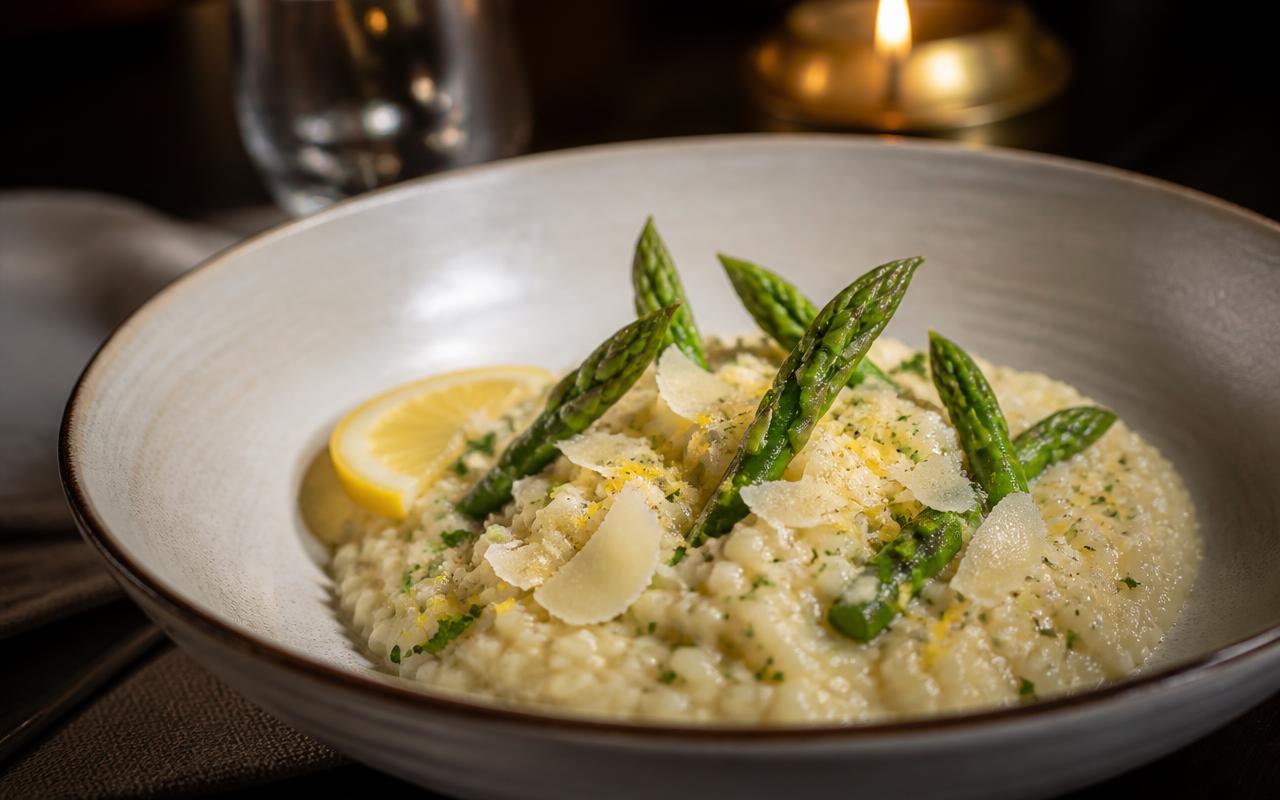
Spoon the risotto into warmed shallow bowls, letting it spread slightly on its own since properly cooked risotto should flow rather than mound. Arrange the reserved roasted asparagus spears artfully on top, alternating direction for visual interest. Finish with a light shaving of Parmesan, a few extra herb leaves, and a touch of lemon zest for color and aroma. Serve immediately, as risotto continues to thicken as it sits.
Nutrition (estimated, per serving)
- Calories
- 420 kcal
- Protein
- 12 g
- Carbs
- 58 g
- Fat
- 15 g
- Sodium
- 150 mg per serving
Nutrition and sodium information is an estimate only and will vary based on ingredients, brands, serving sizes and preparation methods. Always check the labels on the products you buy.
Substitutions
- Use vegetable or mushroom stock for a deeper, earthier flavor profile.
- Substitute frozen peas for asparagus when it is out of season, adding them in the last five minutes of cooking.
- Nutritional yeast can replace Parmesan for a dairy-free version, though the flavor will be milder.
- Carnaroli rice can be used in place of Arborio for an even creamier texture.
- Fresh tarragon or basil can be swapped in for parsley for a different herbal note.
Suggested side
Pair with a simple arugula salad dressed with lemon and olive oil to balance the richness of the risotto.
Pairing
A crisp, mineral-driven Pinot Grigio or Vermentino complements the lemon and Parmesan beautifully; for a non-alcoholic option, try sparkling water with fresh mint and lemon.
Storage and reheating
Risotto is best enjoyed fresh, but leftovers can be refrigerated in an airtight container for up to two days. Reheat gently on the stovetop with a splash of stock, stirring frequently to restore creaminess.