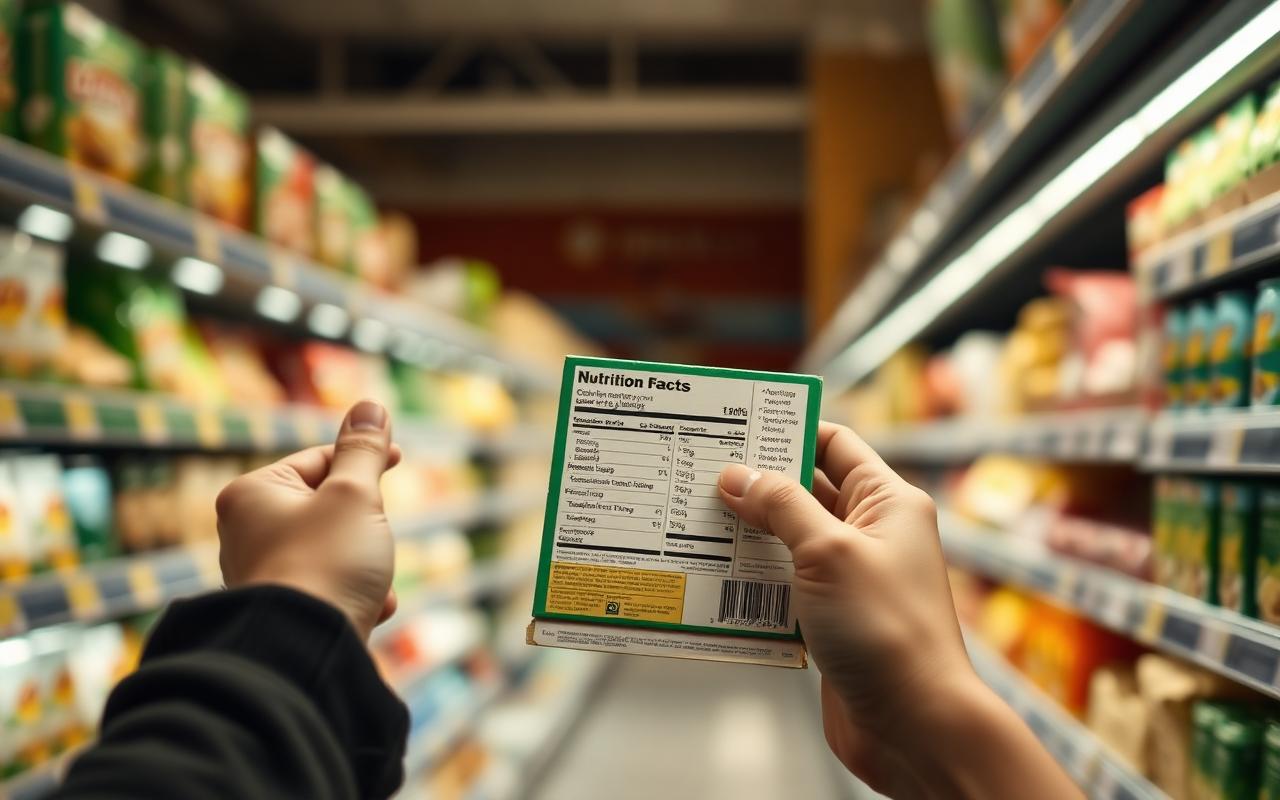
Nutrition labels are supposed to make comparing foods easier, but sodium numbers are where a lot of shoppers get tripped up. Serving sizes are inconsistent, front-of-package claims sound reassuring without always meaning what people assume, and ingredient lists hide sodium under names that do not obviously say "salt." Once you know what to look for, though, reading a label for sodium takes about ten seconds.
This guide covers the mechanics: where to find the number, how to judge whether it is high or low, what the regulated label claims actually mean, and which ingredient names should make you pause.
Start With the Serving Size
Every sodium number on a label is per serving, and serving sizes are not always what you would actually eat. A bag of chips might list a serving as 12 chips when you are realistically going to eat 30. A can of soup might claim "2 servings" when most people eat the whole can in one sitting.
Before you even look at the sodium number, check:
- What is the serving size, in a real-world unit (cups, pieces, grams)?
- How many servings are in the package or container?
- Is that close to what you would actually eat in one sitting?
If a product looks impressively low in sodium but has a tiny serving size, do the math: multiply the per-serving sodium by how many servings you will actually eat, not the number printed at the top of the label.
Milligrams and %DV: What the Numbers Mean
The label shows sodium in milligrams (mg) and as a percent of Daily Value (%DV). The %DV is based on a 2,300 mg daily reference, which conveniently lines up with the upper limit in the Dietary Guidelines for Americans. The American Heart Association's suggested ideal limit of 1,500 mg a day is lower than that reference value, so if you are working toward the stricter number, treat the label's %DV as a slightly generous baseline.
A simple rule of thumb used by dietitians:
- 5% DV or less per serving is considered low in sodium.
- 20% DV or more per serving is considered high in sodium.
Anything in between is a middle ground worth weighing against the rest of your day. If breakfast and lunch were both low sodium, a moderate dinner item has more room to fit.
Per Serving vs. Per 100g: Why It Matters When Comparing
Comparing two products only works cleanly if they use similar serving sizes. When they do not, compare sodium per 100 grams instead — many packages list this, especially imported products, or you can calculate it yourself from the serving size and package weight. This matters most when comparing, say, a cracker with a 15g serving to one with a 30g serving; the per-serving numbers alone will mislead you.
Worked Example: Comparing Two Jarred Pasta Sauces
Here is a realistic comparison of two hypothetical jarred marinara sauces, since brand-to-brand sodium content varies quite a bit and these numbers are illustrative estimates rather than any specific product:
| Sauce A | Sauce B | |
|---|---|---|
| Serving size | 1/2 cup (125g) | 1/2 cup (125g) |
| Sodium per serving | 480 mg | 90 mg |
| %DV | 21% | 4% |
| Front label claim | none | "no salt added" |
| Sodium per 100g | 384 mg | 72 mg |
Sauce A crosses the 20% DV threshold on its own, in a single half-cup serving — and most people use closer to a full cup per plate of pasta, effectively doubling that number. Sauce B, labeled "no salt added," comes in well under the 5% DV low-sodium threshold even before you factor in a larger portion. If you like a saltier flavor, you can always season Sauce B yourself and control the amount, which you cannot do in reverse with Sauce A. This is exactly the logic behind swaps like the one described in our no-salt-added marinara recipe, where you build flavor with garlic, herbs, and good tomatoes instead of relying on sodium.
Front-of-Package Claims and What They Legally Mean
In the United States, sodium-related claims on packaging are regulated terms, not just marketing language. Here is what each one actually means:
| Claim | What it means |
|---|---|
| Sodium free | Less than 5 mg sodium per serving |
| Very low sodium | 35 mg or less per serving |
| Low sodium | 140 mg or less per serving |
| Reduced sodium (or "less sodium") | At least 25% less sodium than the regular version of the product |
| No salt added / Unsalted | No salt added during processing (the food may still naturally contain sodium, or may contain sodium from other ingredients) |
| Lightly salted | At least 50% less sodium than the regular version |
The important nuance is "reduced sodium" and "lightly salted" — these are relative claims. A food that started extremely high in sodium can carry a "reduced sodium" label and still be a high-sodium food in absolute terms. Always check the actual mg and %DV rather than trusting the front label alone, a habit that pairs well with the swap strategies in easy low-sodium food swaps.
Ingredient List Red Flags
Sodium hides under a lot of names that do not include the word "sodium" prominently, or that sound more like a technical additive than a seasoning. Watch for these on ingredient lists, especially near the top:
- Sodium bicarbonate — baking soda, common in baked goods
- Baking soda — same compound, common name
- Monosodium glutamate (MSG) — a flavor enhancer that also contributes sodium
- Disodium phosphate — used in processed cheese, instant puddings, and some meats
- Sodium nitrite / sodium nitrate — preservatives common in cured and deli meats
- Sodium benzoate — a preservative found in sauces, dressings, and beverages
- Brine — literally a salt-water solution, common in pickles, olives, and some poultry
- Soy sauce — very high in sodium even in small amounts, common in marinades and Asian-style sauces
Seeing one of these does not automatically make a food off-limits, but if you see several of them clustered near the top of an ingredient list, it is a strong signal that the product is likely to be high in sodium even if the front label looks unassuming. This ingredient-scanning habit pairs naturally with learning to spot hidden sources of sodium that show up in everyday foods like bread and cereal, not just obviously salty snacks.
Building the Habit
Reading labels gets faster with repetition. A good approach for your first few grocery trips:
- Pick up your usual brand of a staple item — bread, canned beans, salad dressing.
- Check the sodium per serving and %DV.
- Check one alternative brand or a "no salt added"/"low sodium" version next to it.
- Note which one is genuinely lower once you account for realistic serving size.
Do this for five or six staples and you will have rebuilt a meaningfully lower-sodium pantry within a couple of shopping trips. For a full aisle-by-aisle strategy, pair this habit with our low-sodium grocery shopping guide.
Related Reading
- Low-Sodium Grocery Shopping Guide — an aisle-by-aisle plan for rebuilding your pantry.
- Hidden Sources of Sodium You May Not Expect — foods that carry sodium without tasting salty.
- Easy Low-Sodium Food Swaps — direct substitutions for common high-sodium staples.
- Low-Sodium Eating for Beginners — a starting-point overview if you are new to this way of eating.