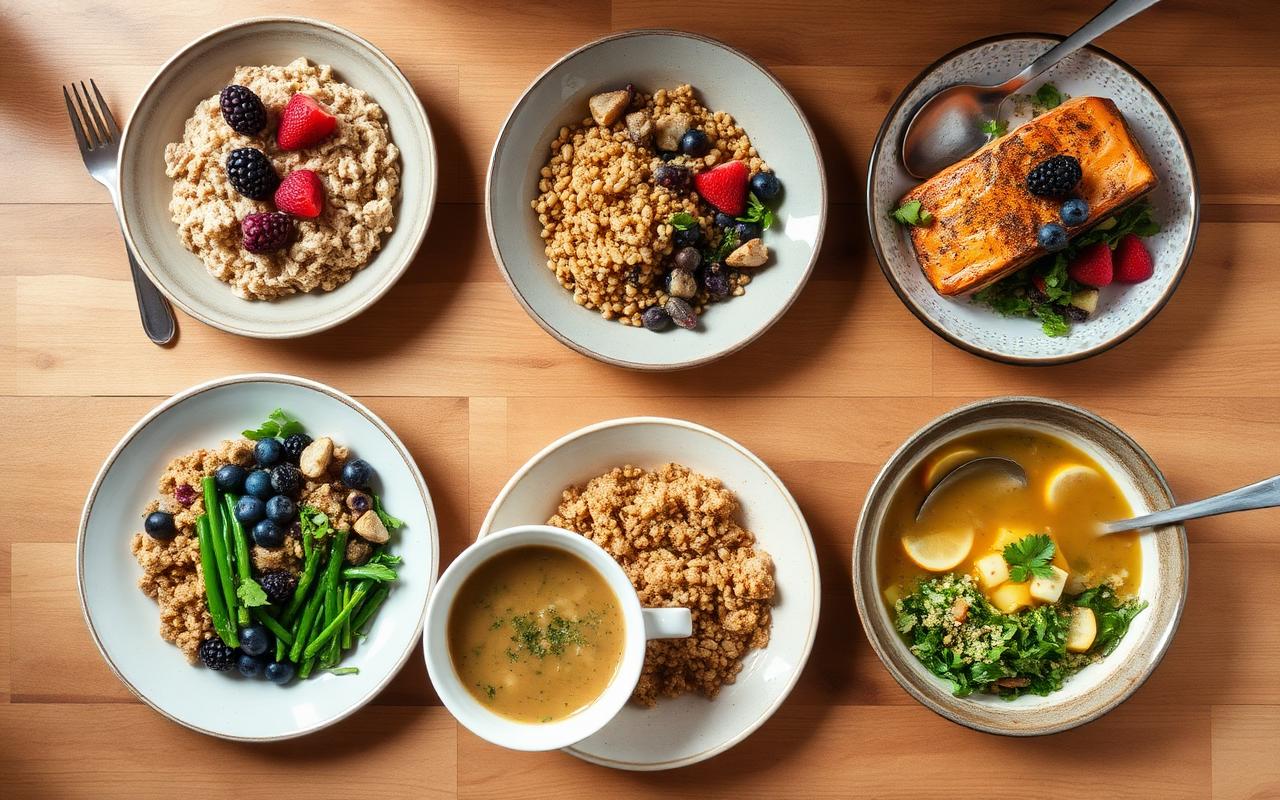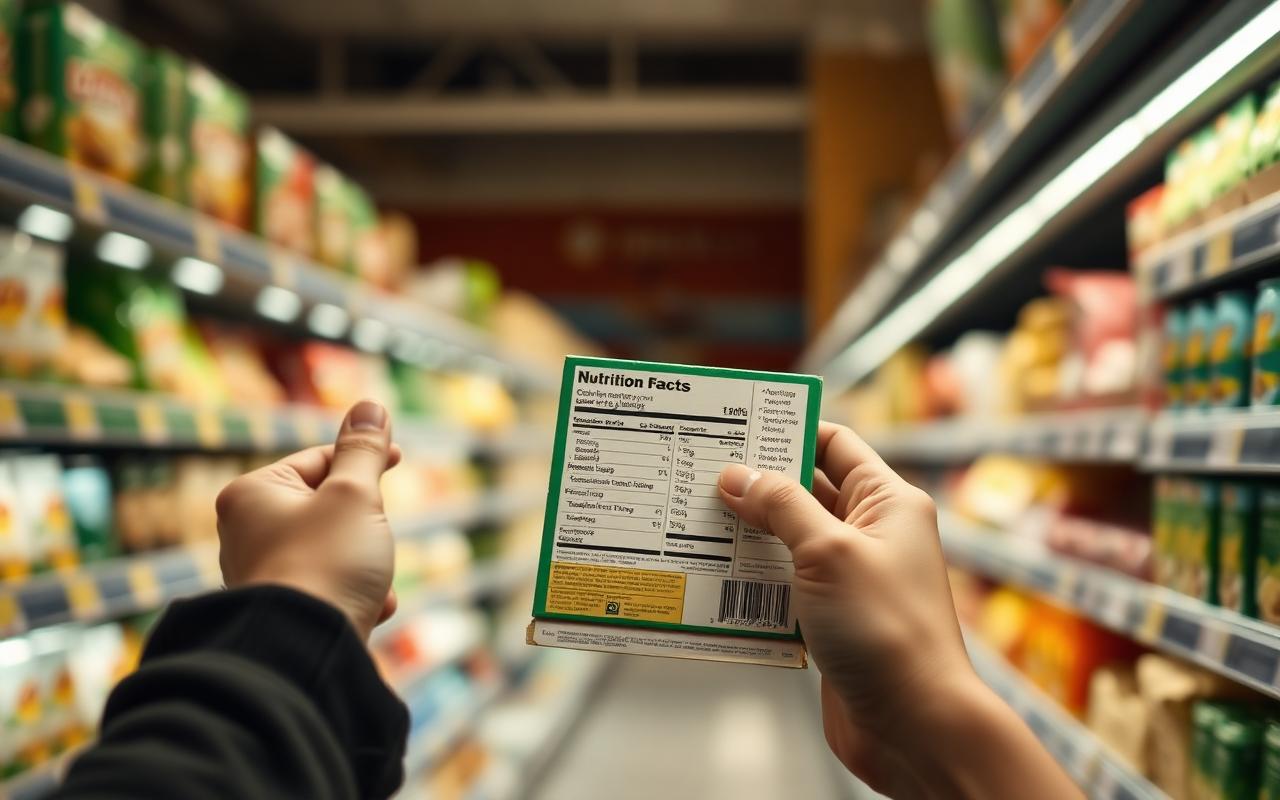
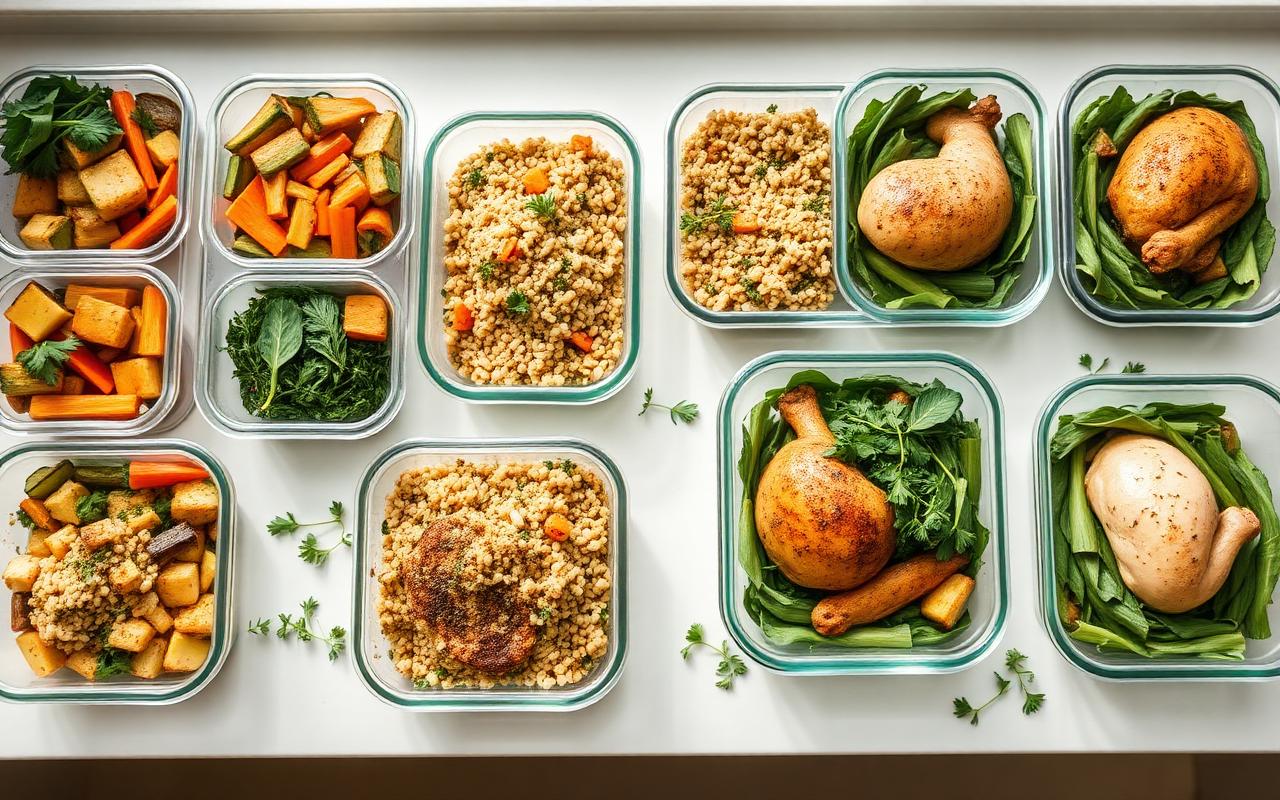
Meal prep solves the exact problem that trips up most people new to low-sodium eating: when you're tired and hungry on a Tuesday, the easiest thing to reach for is usually the saltiest thing in the house. If you've already done the cooking, the easiest thing becomes the healthiest thing.
This isn't about cooking seven identical meals and eating the same bowl all week. It's a system — a small set of components you build once and recombine differently each day, so you get variety without daily effort. If you're brand new to the basics of eating this way, start with low-sodium eating for beginners and come back here once you're ready to build a routine.
Anyone managing a medical condition or a doctor-prescribed sodium limit should follow their healthcare professional's specific guidance rather than a general plan like this one.
Step 1: Pick Your Anchors
Before you shop, decide on three things:
- Two proteins for the week (for example, roast chicken and a pot of beans)
- Two grains or starches (rice, farro, potatoes)
- Two sauces or dressings that will carry the flavor
Everything else — vegetables, snacks, breakfasts — fills in around these anchors. Choosing them first keeps your grocery list focused and keeps you from buying six ingredients you'll only use once.
The 2-Hour Sunday Sequence
A full prep session doesn't need to sprawl across your whole afternoon if you work in the right order. Here's a timeline that overlaps hands-off cooking with active chopping:
- 0:00–0:10 — Preheat the oven, put grains or beans on to simmer, and set a pot of water to boil for anything blanched.
- 0:10–0:25 — Season and start your roasted protein (something like lemon herb roast chicken) and get it in the oven.
- 0:25–0:45 — While the protein and grains cook, wash and chop vegetables for roasting.
- 0:45–1:05 — Swap in the vegetable tray (try garlic herb roasted vegetables) once the protein is resting or nearly done.
- 1:05–1:20 — Make your sauces and dressings while everything else finishes cooking.
- 1:20–1:35 — Prep raw vegetables and fruit for snacking; portion into containers.
- 1:35–1:50 — Let everything cool slightly, then divide proteins, grains, and vegetables into storage containers.
- 1:50–2:00 — Label containers with the date and get them into the fridge or freezer.
Batch the Proteins
Pick proteins that reheat well and take differently to sauces. A whole roast chicken, a pot of unsalted black beans (see the low-sodium black bean soup for a base you can thin or thicken), and a tray of baked fish like citrus herb white fish cover a lot of ground between them. Season proteins simply while cooking — citrus, garlic, and a no-salt blend — and save bolder, saltier-tasting flavor for the sauce you add at the end.
Batch the Grains
Cook grains in unsalted water or no-salt vegetable stock instead of plain water when you want more depth. Rice, farro, quinoa, and potatoes all hold up for four to five days refrigerated. Cook grains slightly underdone if you plan to freeze portions, since they'll finish softening when reheated.
Batch Roasted and Raw Vegetables
Roast one tray of sturdy vegetables (carrots, broccoli, sweet potato) with olive oil and a salt-free seasoning blend, and prep a second batch of raw vegetables — cucumber, bell pepper, snap peas — for snacking or salads. Roasted vegetables keep three to four days; raw cut vegetables are best within five days if stored dry.
Sauces That Carry the Flavor
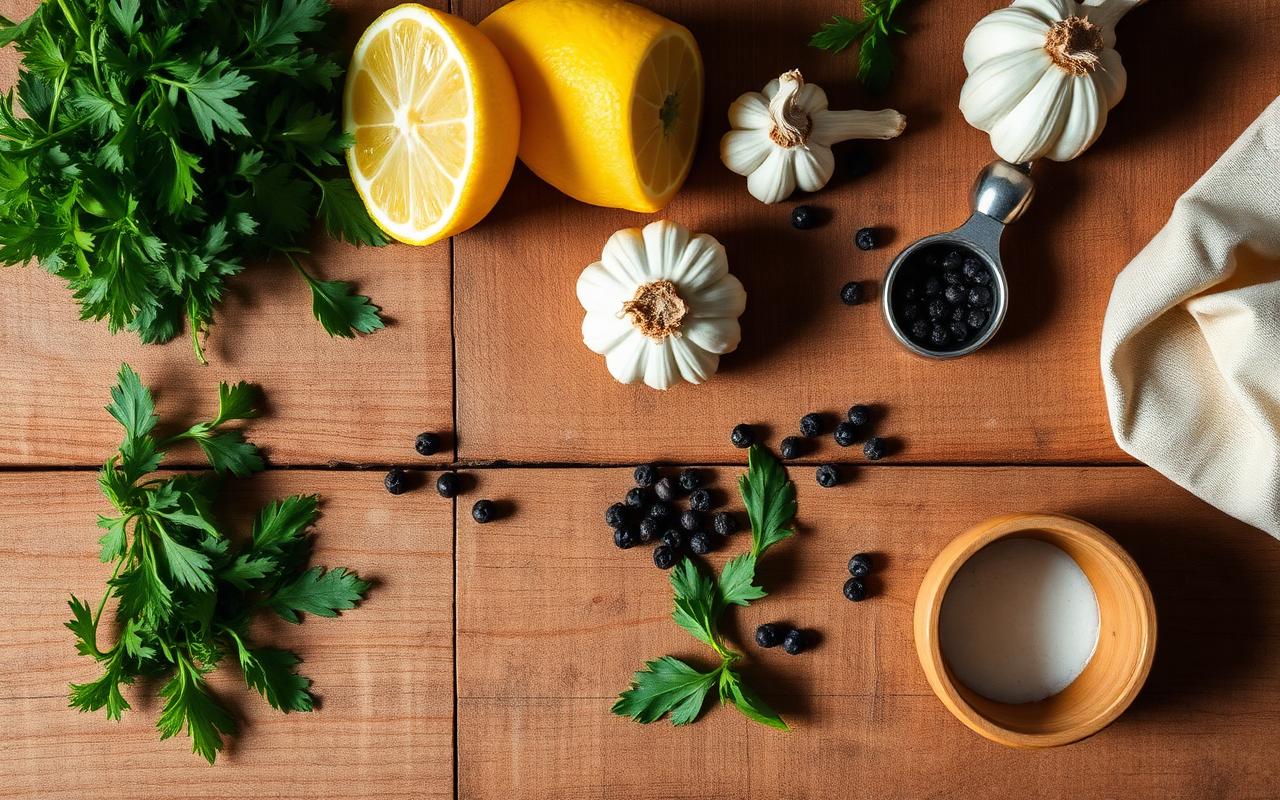
This is the step that keeps low-sodium meal prep from tasting flat by Thursday. A bright, herby sauce lets you dress the same chicken and rice differently each day. Make a batch of herby yogurt sauce for cooling, creamy meals, and keep a jar of all-purpose salt-free seasoning on the counter to punch up anything that tastes a little tired straight from the fridge. For more ideas on building flavor without reaching for the salt shaker, see how to add flavor without salt.
Snacks
Prep snacks the same day so they're grab-and-go: portioned unsalted nuts, cut fruit, hard-boiled eggs, and vegetables with a scoop of yogurt sauce. For more, browse low-sodium snack ideas.
Storage Containers and Food Safety Timing
Glass or BPA-free plastic containers with tight lids work best; they don't absorb sauce colors or odors the way soft plastic does. As a general guide:
| Component | Fridge life |
|---|---|
| Cooked grains | 4–5 days |
| Roasted protein | 3–4 days |
| Roasted vegetables | 3–4 days |
| Raw cut vegetables | 4–5 days |
| Sauces and dressings | 4–6 days |
Cool food to room temperature before sealing containers, but don't leave it out longer than about two hours, and refrigerate promptly.
Freezing
Proteins and grains freeze well in flat, labeled bags for up to three months; thaw overnight in the fridge. Raw vegetables and dressings with dairy or fresh herbs generally don't freeze well, so make those fresh mid-week instead.
The Mix-and-Match Matrix
Three proteins, three grains, and three sauces combine into 27 distinct meals without any extra cooking:
| Rice | Farro | Roasted potatoes | |
|---|---|---|---|
| Chicken | Chicken + rice + herby yogurt sauce | Chicken + farro + salt-free seasoning and lemon | Chicken + potatoes + herby yogurt sauce |
| Beans | Beans + rice + salsa-style salt-free seasoning | Beans + farro + herby yogurt sauce | Beans + potatoes + hot sauce |
| Fish | Fish + rice + herby yogurt sauce | Fish + farro + lemon and herbs | Fish + potatoes + salt-free seasoning |
Troubleshooting
"I'm bored by Wednesday." Change the sauce, not the whole meal. A squeeze of citrus, a spoonful of yogurt sauce, or a different herb can make the same base taste new. Rotating between a few salt-free seasonings also helps a lot.
"My vegetables get soggy." Store roasted vegetables in a shallow, wide container instead of a deep one, and leave the lid slightly cracked while they cool. Keep sauces in separate small containers and add them right before eating instead of mixing everything together in advance.
"Everything tastes the same." That usually means every component was seasoned identically. Vary your herbs between batches — rosemary and garlic for one protein, cumin and lime for another — even if the base ingredients repeat.
Once this rhythm feels natural, you can build out a full week ahead of time; see our 7-day low-sodium meal plan for a ready-made structure to adapt.
Related Reading
- Low-Sodium Eating for Beginners — the basics before you start batching.
- Add Flavor Without Salt — techniques to keep prepped food interesting.
- Best Salt-Free Seasonings — blends worth keeping on hand for prep day.
- Low-Sodium Snack Ideas — quick options to prep alongside your main meals.